





Embed
31:15 Videos
12:28 Videos
01:52 Videos
10:45 Videos
37:54 Videos
22:40 Videos
01:36 Videos
02:07 Videos
00:59 Videos
22:40 Videos
01:24 Videos
01:31 Videos
02:54 Videos
20:53 Videos
01:56 Videos
03:21 Videos
04:03 Videos
03:09 Videos
03:47 Videos
01:50 Videos
11:17 Videos
01:29 Videos
03:28 Videos
04:33 Videos
34:14 Videos
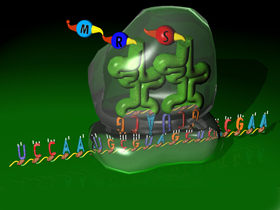
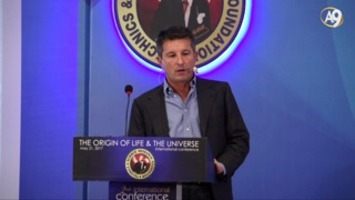
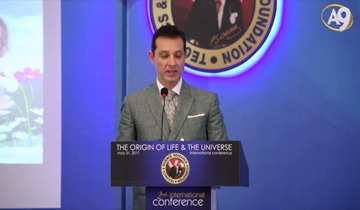
This video features a Q&A session from an international conference on the origin of life and the universe. Experts analyze the biochemical complexities of DNA, RNA, and protein synthesis, arguing that these structures provide clear evidence of intelligent agency rather than random occurrences. The discussion refutes materialist claims and emphasizes that the sophistication of cellular machinery and the fine-tuning of the universe point directly to Allah's artistry in creation.
- The information-rich nature of DNA and proteins requires an intelligent agent, as naturalistic processes cannot account for their emergence.
- The chicken-and-egg paradox of interdependent cellular components serves as profound evidence for Allah's art of creation.
- The sophistication of cellular quality control and the fine-tuning of physical constants demonstrate a universe purposefully designed for life.
Why cannot proteins and DNA arise by chance? +
Proteins and DNA are information-rich molecules. Scientific efforts to generate this information in laboratory settings consistently require intelligent input, demonstrating that the complexity of these structures necessitates an intelligent agent rather than random naturalistic processes.
What is the significance of the chicken and egg paradox in biochemistry? +
DNA requires proteins to replicate, and proteins require DNA to be synthesized. This dependency makes it impossible for either to function without the other, proving that life could not have started through a piecemeal process and must be the result of a deliberate, flawless creation.
How does modern synthetic biology support the existence of a creator? +
Synthetic biology shows that even with advanced human intelligence and technology, creating cell-like entities is an immense challenge. If scientists require intense planning and design to replicate basic biological functions, it stands to reason that the original design of life is proof of a supreme creator.
What does the Higgs boson reveal about the universe? +
The Higgs boson explains how particles acquire mass, which is essential for the complexity of the universe. Its discovery confirms the fine-tuning of physical laws, indicating that the universe was designed specifically to support life rather than emerging through blind, undirected chance.
Summary
This video features a Q&A session from an international conference on the origin of life and the universe. Experts analyze the biochemical complexities of DNA, RNA, and protein synthesis, arguing that these structures provide clear evidence of intelligent agency rather than random occurrences. The discussion refutes materialist claims and emphasizes that the sophistication of cellular machinery and the fine-tuning of the universe point directly to Allah's artistry in creation.
Key Takeaways
- The information-rich nature of DNA and proteins requires an intelligent agent, as naturalistic processes cannot account for their emergence.
- The chicken-and-egg paradox of interdependent cellular components serves as profound evidence for Allah's art of creation.
- The sophistication of cellular quality control and the fine-tuning of physical constants demonstrate a universe purposefully designed for life.
Frequently Asked Questions
Why cannot proteins and DNA arise by chance?
Proteins and DNA are information-rich molecules. Scientific efforts to generate this information in laboratory settings consistently require intelligent input, demonstrating that the complexity of these structures necessitates an intelligent agent rather than random naturalistic processes.
What is the significance of the chicken and egg paradox in biochemistry?
DNA requires proteins to replicate, and proteins require DNA to be synthesized. This dependency makes it impossible for either to function without the other, proving that life could not have started through a piecemeal process and must be the result of a deliberate, flawless creation.
How does modern synthetic biology support the existence of a creator?
Synthetic biology shows that even with advanced human intelligence and technology, creating cell-like entities is an immense challenge. If scientists require intense planning and design to replicate basic biological functions, it stands to reason that the original design of life is proof of a supreme creator.
What does the Higgs boson reveal about the universe?
The Higgs boson explains how particles acquire mass, which is essential for the complexity of the universe. Its discovery confirms the fine-tuning of physical laws, indicating that the universe was designed specifically to support life rather than emerging through blind, undirected chance.