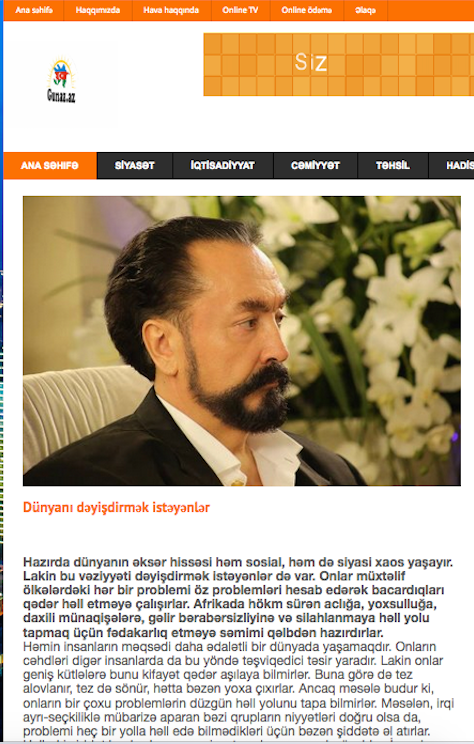
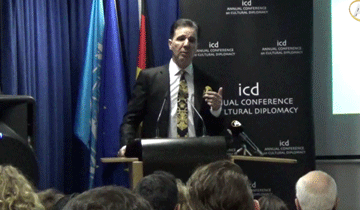
Segment from Dr. Oktar Babuna’s speech at the International Symposium on Cultural Diplomacy in the UN, September 22nd, 2017
1291






 26:09 Videos
 01:04 Videos
 01:10 Videos
 02:53 Videos
 11:38 Videos
 02:07 Videos
 00:59 Videos
 02:02 Videos
 02:11 Videos
 00:54 Videos
 00:15 Videos
 02:29 Videos
 14:40 Videos
 04:53 Videos
 01:49 Videos
 07:05 Videos
 00:05 Videos
 HD 23:47 Videos
 02:01 Videos
 03:47 Videos
 01:50 Videos
 11:17 Videos
 30:02 Videos
 01:29 Videos
 03:28 Videos
This video highlights the urgent need to address the rising tide of hatred and fanaticism across the globe. By identifying how radical ideologies and survival-of-the-fittest mindsets exacerbate conflicts in the Middle East and beyond, it proposes that a foundational education based on love and reconciliation is the only path to achieving lasting world peace and global harmony.
Love acts as a fundamental remedy for the hatred and fanaticism that drive modern conflict. Without replacing these negative ideologies with an education centered on love, social and political problems cannot be effectively resolved.
Radical views are not inherent but are learned behaviors. They are typically instilled through environments of fanaticism within families and schools, which promote the idea that life is a constant struggle for survival.
The belief that one must fight to survive leads to the adoption of destructive philosophies like fascism and unrestrained materialism. These worldviews prioritize conflict over cooperation, creating the very tensions that destabilize nations.
While cultural diplomacy is a useful mechanism for international relations, it must be supported by a sincere focus on reconciliation. True peace requires addressing the underlying lack of love that prevents people from resolving their differences.
This video highlights the urgent need to address the rising tide of hatred and fanaticism across the globe. By identifying how radical ideologies and survival-of-the-fittest mindsets exacerbate conflicts in the Middle East and beyond, it proposes that a foundational education based on love and reconciliation is the only path to achieving lasting world peace and global harmony.
Love acts as a fundamental remedy for the hatred and fanaticism that drive modern conflict. Without replacing these negative ideologies with an education centered on love, social and political problems cannot be effectively resolved.
Radical views are not inherent but are learned behaviors. They are typically instilled through environments of fanaticism within families and schools, which promote the idea that life is a constant struggle for survival.
The belief that one must fight to survive leads to the adoption of destructive philosophies like fascism and unrestrained materialism. These worldviews prioritize conflict over cooperation, creating the very tensions that destabilize nations.
While cultural diplomacy is a useful mechanism for international relations, it must be supported by a sincere focus on reconciliation. True peace requires addressing the underlying lack of love that prevents people from resolving their differences.

Install the app
Tap the share button , then select "Add to Home Screen".