logo HARUN YAHYA
  • Home
  • All Works
  • Books
  • Articles
  • Horizontal Vertical
  • Voices
  • Images
  • Quotes
  • Other
  • Home
  • All Works
  • Books
  • Articles
  • Horizontal Vertical
  • Voices
  • Images
  • Quotes
  • Other
logo HARUN YAHYA
  • All Works
  • Books
  • Articles
  • Videos — Horizontal
  • Videos — Vertical
  • Voices
  • Images
  • Quotes
  • Other
  • Documentaries
  • Mahdi, Jesus And The End Times
  • Collapse Of The Theory Of Evolution
  • Signs Leading To Faith And Miracle Of Creation
  • People Of The Book And Prophets
  • Turkish Islamic Union
  • Outlook To Other Faith And Philosophies
  • The Secret Beyond Matter
  • Harun Yahya And Influences
  • International Conferences
  • Scientists Talk About Creation
  • What Did They Say For Evolution?
  • Genuine Ataturkism
  • Justice for All
  • Interviews Of A9 Tv
  • Q&A
  • Pleasant Thoughts
  • History, Politics And Strategy
  • Morality Of The Qur'An And Deep Thinking
Videos Prof. Nazar Al Baharna, Former Minister of State for Foreign Affairs o...
Luc Van den Brande, Former Minister-President of Flanders-Belgium, Former President of the European Committee of the Regions, ICD Advisory Board Member Luc Van den Brande, Former Minister-President of Flanders-Belgium, Former President of the European Committee of the Regions, ICD Advisory Board Member H. E. Amb. Katalin Bogyay, Permanent Delegate of Hungary to UNESCO, President of the General Conference of UNESCO H. E. Amb. Katalin Bogyay, Permanent Delegate of Hungary to UNESCO, President of the General Conference of UNESCO President Petru Lucinschi, Former President of Republic of Moldova President Petru Lucinschi, Former President of Republic of Moldova Ögmundur Jonasson, Former Minister of the Interior of Iceland, Former Minister of Justice & Human Rights, Member of the Parliamentary Assembly of the Council of Europe (PACE), President of the ICD Program for Human Rights Ögmundur Jonasson, Former Minister of the Interior of Iceland, Former Minister of Justice & Human Rights, Member of the Parliamentary Assembly of the Council of Europe (PACE), President of the ICD Program for Human Rights Prof. Enver Halilovic, Rector of University of Tuzla, Former Bosnia Ambassador to Russia Prof. Enver Halilovic, Rector of University of Tuzla, Former Bosnia Ambassador to Russia Prof. Dr. Dragan Domazet, Rector and Founder of Belgrade Metropolitan University, Former Minister of Science of the Republic of Serbia Prof. Dr. Dragan Domazet, Rector and Founder of Belgrade Metropolitan University, Former Minister of Science of the Republic of Serbia President Vaira Vike Freiberga, Former President of Latvia President Vaira Vike Freiberga, Former President of Latvia Heidi Maria Mautionmaa, Journalist from Finland Heidi Maria Mautionmaa, Journalist from Finland Floriane Hohenberg, The Head of ODIHR’s Tolerance and Non-discrimination Department Organization for Security and Cooperation in Europe (OSCE) Floriane Hohenberg, The Head of ODIHR’s Tolerance and Non-discrimination Department Organization for Security and Cooperation in Europe (OSCE) Jean – Paul Adam, Minister For Foreign Affairs – The Republic of Seychelles Jean – Paul Adam, Minister For Foreign Affairs – The Republic of Seychelles Mustafa Kamil Alfalahi, Political Analyst, Iraq Mustafa Kamil Alfalahi, Political Analyst, Iraq Dr. Rupert Graf Strachwitz, Political Scientist and Historian, The Director of The Maecenata Institute, Humboldt University, Berlin Dr. Rupert Graf Strachwitz, Political Scientist and Historian, The Director of The Maecenata Institute, Humboldt University, Berlin
00:00
Subtitles
Off
English (generated automatically)
00:00/00:00

Prof. Nazar Al Baharna, Former Minister of State for Foreign Affairs of Bahrain, Former Dean of Engineering at Bahrain University, Visiting Research Scholar at Georgetown University, ICD Advisory Board Member

5307 January 18, 2014
History, Politics And Strategy Leaders And Thinkers Discuss Peace, Religion And Politics

Turkey the Leader Country
Neither the United States nor the Europe. Merely Turkey will grow Articles
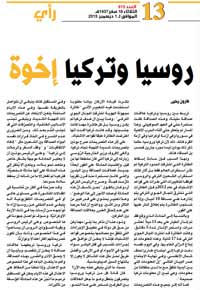
Neither the United States nor the Europe. Merely Turkey will grow
More Than Friends: The Russia, Turkey Relationship Articles
More Than Friends: The Russia, Turkey Relationship
Turkey is now a world star Articles
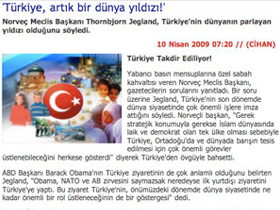
Turkey is now a world star
Italian Professor: Istanbul will be the capital city of EU… Articles
Italian Professor: Istanbul will be the capital city of EU…
Kashmir also lays its hope in Turkey Articles
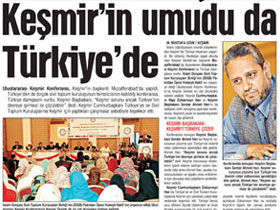
Kashmir also lays its hope in Turkey
In the next decade Turkey will be the strongest country of Europe Articles
In the next decade Turkey will be the strongest country of Europe
SHARE
Facebook
X
WhatsApp
Telegram
QR Code
Embed
QR Code

Embed

Downloads
mp3 mp4
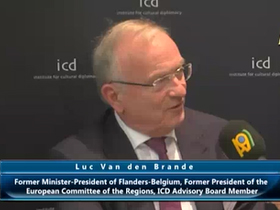
Luc Van den Brande, Former Minister-President of Flanders-Belgium, Former President of the European Committee of the Regions, ICD Advisory Board Member 06:17 Videos
Luc Van den Brande, Former Minister-President of Flanders-Belgium, Former President of the European Committee of the Regions, ICD Advisory Board Member
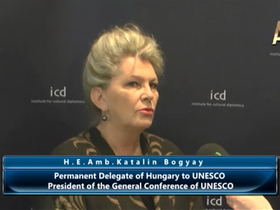
H. E. Amb. Katalin Bogyay, Permanent Delegate of Hungary to UNESCO, President of the General Conference of UNESCO 10:32 Videos
H. E. Amb. Katalin Bogyay, Permanent Delegate of Hungary to UNESCO, President of the General Conference of UNESCO
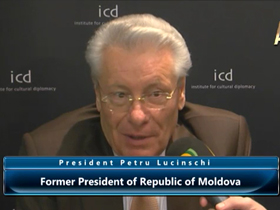
President Petru Lucinschi, Former President of Republic of Moldova 07:07 Videos
President Petru Lucinschi, Former President of Republic of Moldova
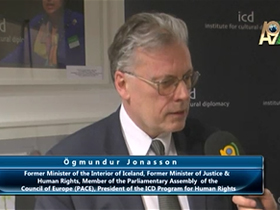
Ögmundur Jonasson, Former Minister of the Interior of Iceland, Former Minister of Justice & Human Rights, Member of the Parliamentary Assembly of the Council of Europe (PACE), President of the ICD Program for Human Rights 02:45 Videos
Ögmundur Jonasson, Former Minister of the Interior of Iceland, Former Minister of Justice & Human Rights, Member of the Parliamentary Assembly of the Council of Europe (PACE), President of the ICD Program for Human Rights
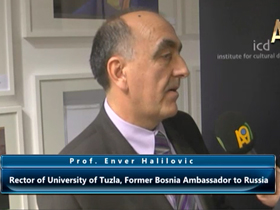
Prof. Enver Halilovic, Rector of University of Tuzla, Former Bosnia Ambassador to Russia 02:33 Videos
Prof. Enver Halilovic, Rector of University of Tuzla, Former Bosnia Ambassador to Russia
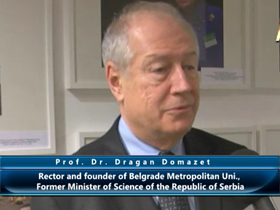
Prof. Dr. Dragan Domazet, Rector and Founder of Belgrade Metropolitan University, Former Minister of Science of the Republic of Serbia 02:39 Videos
Prof. Dr. Dragan Domazet, Rector and Founder of Belgrade Metropolitan University, Former Minister of Science of the Republic of Serbia
President Vaira Vike Freiberga, Former President of Latvia 04:42 Videos
President Vaira Vike Freiberga, Former President of Latvia
Heidi Maria Mautionmaa, Journalist from Finland 00:56 Videos
Heidi Maria Mautionmaa, Journalist from Finland
Floriane Hohenberg, The Head of ODIHR’s Tolerance and Non-discrimination Department Organization for Security and Cooperation in Europe (OSCE) 01:13 Videos
Floriane Hohenberg, The Head of ODIHR’s Tolerance and Non-discrimination Department Organization for Security and Cooperation in Europe (OSCE)
Jean – Paul Adam, Minister For Foreign Affairs – The Republic of Seychelles 04:00 Videos
Jean – Paul Adam, Minister For Foreign Affairs – The Republic of Seychelles
Mustafa Kamil Alfalahi, Political Analyst, Iraq 08:36 Videos
Mustafa Kamil Alfalahi, Political Analyst, Iraq
Dr. Rupert Graf Strachwitz, Political Scientist and Historian, The Director of The Maecenata Institute, Humboldt University, Berlin 01:33 Videos
Dr. Rupert Graf Strachwitz, Political Scientist and Historian, The Director of The Maecenata Institute, Humboldt University, Berlin
Prof. Dr. Lester M. Salamon, Director of the Johns Hopkins Center for Civil Society Studies, USA 03:11 Videos
Prof. Dr. Lester M. Salamon, Director of the Johns Hopkins Center for Civil Society Studies, USA
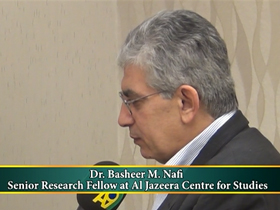
Dr. Basheer M. Nafi, Historian, Senior Research Fellow at Al Jazeera Centre for Studies 01:19 Videos
Dr. Basheer M. Nafi, Historian, Senior Research Fellow at Al Jazeera Centre for Studies
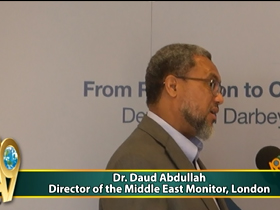
Dr. Daud Abdullah, Director of the Middle East Monitor, London 03:01 Videos
Dr. Daud Abdullah, Director of the Middle East Monitor, London
Osama Farid, Vice Chairman of the Egyptian Business Development Association (EBDA), Egypt 02:18 Videos
Osama Farid, Vice Chairman of the Egyptian Business Development Association (EBDA), Egypt
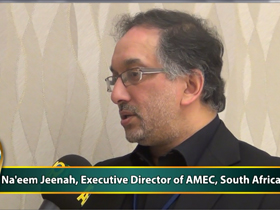
Na’eem Jeenah, Executive Director of AMEC, South Africa 04:03 Videos
Na’eem Jeenah, Executive Director of AMEC, South Africa
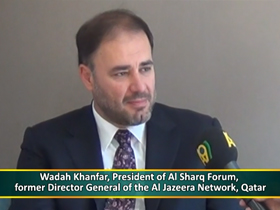
Wadah Khanfar, President of Al Sharq Forum, Former Director General of the Al Jazeera Network, Quatar 03:55 Videos
Wadah Khanfar, President of Al Sharq Forum, Former Director General of the Al Jazeera Network, Quatar
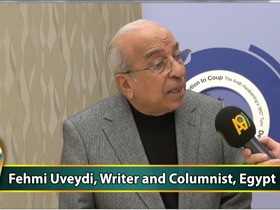
Fehmi Uveydi, Writer and Columnist, Egypt 01:00 Videos
Fehmi Uveydi, Writer and Columnist, Egypt
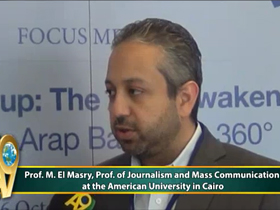
Prof. M. El Masry, Prof. of Journalism and Mass Communication at the American University in Cairo 00:59 Videos
Prof. M. El Masry, Prof. of Journalism and Mass Communication at the American University in Cairo
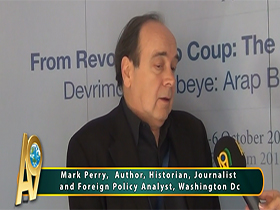
Mark Perry, Author, Historian, Journalist and Foreign Policy Analyst, Washington Dc 01:49 Videos
Mark Perry, Author, Historian, Journalist and Foreign Policy Analyst, Washington Dc
Peter Oborne, the Chief Political Commentator of the Daily Telegraph, London 01:17 Videos
Peter Oborne, the Chief Political Commentator of the Daily Telegraph, London
Azzam Tamimi, Chairman of Al Hiwar Tv Channel, London 02:43 Videos
Azzam Tamimi, Chairman of Al Hiwar Tv Channel, London
Mark Perry, Author, Historian, Journalist and Foreign Policy Analyst, Washington Dc. 01:49 Videos
Mark Perry, Author, Historian, Journalist and Foreign Policy Analyst, Washington Dc.
Rev.Fr.Indunil, Undersecretary of the Pontifical Council for Interreligious Dialogue, Sri Lanka 04:21 Videos
Rev.Fr.Indunil, Undersecretary of the Pontifical Council for Interreligious Dialogue, Sri Lanka

This video features Prof. Nazar Al-Baharna discussing a new model for global conflict resolution that shifts focus from top-down political mediation to sustainable development. By addressing economic, social, environmental, cultural, and governmental factors through community-led enterprises, he proposes a grassroots approach to democracy and human rights. This method empowers citizens to manage their own services and economic stability, aiming for lasting peace beyond traditional diplomatic intervention.

  • Conflict resolution should be based on addressing six core pillars: political, economic, environmental, social, cultural, and human rights.
  • True stability is achieved by shifting focus from elite-level mediation to empowering the local population through community development enterprises.
  • Community-based enterprises allow citizens to practice democratic governance by electing boards to oversee local services like healthcare and education.
  • A sustainable approach to peace helps nations move toward becoming part of the solution rather than exacerbating existing problems.
What are the six primary pillars that contribute to conflicts according to the proposed model? +

Conflicts generally stem from issues related to politics, economics, environment, social factors, cultural concerns, and human rights. Sustainable development requires addressing these specific areas rather than focusing solely on top-level political negotiations.

Why does the model emphasize community development enterprises over traditional political mediation? +

Traditional mediation often fails because it focuses on conflicting elites rather than the needs of the population. Empowering people through local enterprises ensures that solutions directly improve their lives, security, and economic well-being.

How do community development enterprises function in terms of governance? +

Every eligible adult becomes a shareholder in the community enterprise, which functions as a local entity. Through a general assembly, members elect a board to manage essential public services, effectively allowing democracy and governance to grow from the grassroots level up.

What is the role of the government in the community development enterprise model? +

The government retains the responsibility for creating legislation, while the actual operation of services like education, healthcare, and infrastructure is outsourced to the community companies. This shift ensures services are run by the people who use them.

How can countries avoid future conflicts using this framework? +

By monitoring and proactively addressing the six pillars of sustainable development, nations can identify social or environmental grievances before they escalate. Consistent engagement with the public ensures their requirements are met and conflicts are prevented.

Summary

This video features Prof. Nazar Al-Baharna discussing a new model for global conflict resolution that shifts focus from top-down political mediation to sustainable development. By addressing economic, social, environmental, cultural, and governmental factors through community-led enterprises, he proposes a grassroots approach to democracy and human rights. This method empowers citizens to manage their own services and economic stability, aiming for lasting peace beyond traditional diplomatic intervention.

Key Takeaways

  • Conflict resolution should be based on addressing six core pillars: political, economic, environmental, social, cultural, and human rights.
  • True stability is achieved by shifting focus from elite-level mediation to empowering the local population through community development enterprises.
  • Community-based enterprises allow citizens to practice democratic governance by electing boards to oversee local services like healthcare and education.
  • A sustainable approach to peace helps nations move toward becoming part of the solution rather than exacerbating existing problems.

Frequently Asked Questions

What are the six primary pillars that contribute to conflicts according to the proposed model?

Conflicts generally stem from issues related to politics, economics, environment, social factors, cultural concerns, and human rights. Sustainable development requires addressing these specific areas rather than focusing solely on top-level political negotiations.

Why does the model emphasize community development enterprises over traditional political mediation?

Traditional mediation often fails because it focuses on conflicting elites rather than the needs of the population. Empowering people through local enterprises ensures that solutions directly improve their lives, security, and economic well-being.

How do community development enterprises function in terms of governance?

Every eligible adult becomes a shareholder in the community enterprise, which functions as a local entity. Through a general assembly, members elect a board to manage essential public services, effectively allowing democracy and governance to grow from the grassroots level up.

What is the role of the government in the community development enterprise model?

The government retains the responsibility for creating legislation, while the actual operation of services like education, healthcare, and infrastructure is outsourced to the community companies. This shift ensures services are run by the people who use them.

How can countries avoid future conflicts using this framework?

By monitoring and proactively addressing the six pillars of sustainable development, nations can identify social or environmental grievances before they escalate. Consistent engagement with the public ensures their requirements are met and conflicts are prevented.

Telif Hakkı © 2026 Gizlilik Politikası Kullanım Koşulları Contact