
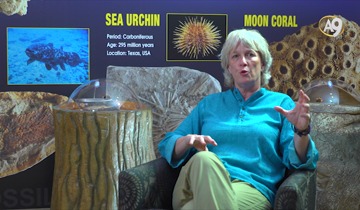




Oh, that's a great question. Mutations are thought of as the basic mechanism for generating novelty in the evolutionary story, right? But when we start to talk about evolutionary novelty I think this is one of the biggest hurdles that evolution theory faces because novelty doesn't mean that I'm just duplicating something that's already there or rearranging something that's already there, scrambling and hoping that once I scrambled it or rearranged it that I've produced a novel information. We can also get genes passed in from other organisms that might introduce novelty but when we realize they were already in another organism then it's not really, truly novelty that’s being driven through these basic evolutionary mechanisms like mutations. So, I think evolutionary novelty is a very high hurdle for naturalistic explanations and I think that's one of those things that points us strongly to design because information is difficult to generate this way.
Embed
12:28 Videos
10:45 Videos
22:40 Videos
01:28 Videos
01:36 Videos
02:07 Videos
01:11 Videos
00:48 Videos
02:29 Videos
13:46 Videos
12:12 Videos
19:16 Videos
04:37 Videos
01:01:11 Videos
00:20 Videos
05:17 Videos
01:50 Videos
34:14 Videos
51:21 Videos
01:35 Videos
03:48 Videos
01:52 Videos
02:04 Videos
04:33 Videos
This video explores the fundamental challenges faced by materialistic theories regarding the origin of biological novelty. It explains that mutations merely scramble or rearrange existing data rather than generating original information, thus failing to account for the complexity of life. Ultimately, the video argues that the nature of genetic information serves as clear evidence for Allah's artistry in creation.
- Mutations are incapable of generating genuine biological novelty.
- Rearranging or scrambling existing genes does not create new information.
- The presence of complex information in living organisms is a clear sign of Allah's artistry in creation.
Why are mutations considered insufficient to produce new biological information? +
Mutations are merely mechanisms that duplicate, rearrange, or scramble existing genetic sequences. They do not possess the capacity to create brand new, complex information, which is a fundamental requirement for the functional systems found in living beings.
What does the existence of genetic information imply about the origin of life? +
The intricate and purposeful information contained within the genetic code points directly toward a deliberate and flawless design. This complexity serves as evidence of Allah's artistry in creation, as naturalistic processes cannot account for the generation of such high-level data.
Why is genetic transfer from other organisms not considered true novelty? +
When genes are transferred from one organism to another, the information already existed in the donor organism. Therefore, it does not represent the creation of new information, but rather the movement of pre-existing, created biological data.
How does the barrier to generating novelty support the concept of design? +
Because naturalistic mechanisms fail to explain the emergence of new, functional information, the presence of such design provides strong evidence for an intelligent creator. The inability of random processes to generate complexity validates the reality of Allah's artistry in creation.
Summary
This video explores the fundamental challenges faced by materialistic theories regarding the origin of biological novelty. It explains that mutations merely scramble or rearrange existing data rather than generating original information, thus failing to account for the complexity of life. Ultimately, the video argues that the nature of genetic information serves as clear evidence for Allah's artistry in creation.
Key Takeaways
- Mutations are incapable of generating genuine biological novelty.
- Rearranging or scrambling existing genes does not create new information.
- The presence of complex information in living organisms is a clear sign of Allah's artistry in creation.
Frequently Asked Questions
Why are mutations considered insufficient to produce new biological information?
Mutations are merely mechanisms that duplicate, rearrange, or scramble existing genetic sequences. They do not possess the capacity to create brand new, complex information, which is a fundamental requirement for the functional systems found in living beings.
What does the existence of genetic information imply about the origin of life?
The intricate and purposeful information contained within the genetic code points directly toward a deliberate and flawless design. This complexity serves as evidence of Allah's artistry in creation, as naturalistic processes cannot account for the generation of such high-level data.
Why is genetic transfer from other organisms not considered true novelty?
When genes are transferred from one organism to another, the information already existed in the donor organism. Therefore, it does not represent the creation of new information, but rather the movement of pre-existing, created biological data.
How does the barrier to generating novelty support the concept of design?
Because naturalistic mechanisms fail to explain the emergence of new, functional information, the presence of such design provides strong evidence for an intelligent creator. The inability of random processes to generate complexity validates the reality of Allah's artistry in creation.