




Embed
41:38 Videos
41:15 Videos
30:59 Videos
26:57 Videos
28:49 Videos
46:59 Videos
39:51 Videos
40:35 Videos
48:23 Videos
36:14 Videos
20:13 Videos
05:57 Videos
49:37 Videos
02:44 Videos
02:31 Videos
31:29 Videos
45:05 Videos
42:10 Videos
41:59 Videos
32:48 Videos
34:25 Videos
26:54 Videos
24:53 Videos
53:30 Videos
50:13 Videos
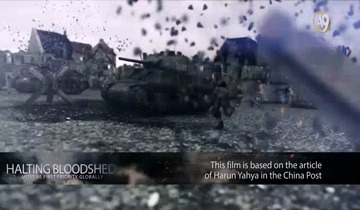
This video analyzes the causes and harrowing consequences of World War I, a conflict that transformed the nature of warfare by targeting civilians alongside soldiers. It explores how political and economic interests fostered a climate of systemic corruption, resulting in unprecedented human loss. Through this historical review, the video emphasizes the importance of adhering to Qur'anic morality and avoiding the corruption that stems from worldly ambition.
- World War I introduced a shift toward warfare that targeted civilians and societies on a massive, global scale.
- The conflict was driven by competing ideological interests and worldly ambitions that ignored the value of human life.
- Qur'anic wisdom explicitly forbids causing corruption on earth and emphasizes the responsibility to uphold justice and peace.
- Millions of lives were lost for minimal territorial gains, demonstrating the senseless nature of ideologically driven wars.
How does the Qur'an address the issue of global conflict and corruption? +
The Qur'an strictly forbids causing corruption on earth, especially after it has been put into a state of order. It calls on humanity to act with integrity and reminds believers that God's mercy is close to those who do good and avoid turmoil.
What characterized the shift in warfare during the 20th century? +
Prior to the 20th century, battles were primarily fought between soldiers on defined front lines. The new form of war introduced in the 20th century expanded the scope to target innocent civilians, entire nations, and infrastructure, leading to massive societal destruction.
What were the human and psychological costs of trench warfare? +
Soldiers lived in extreme filth, constant fear, and were surrounded by the deceased, leading to severe psychological trauma known as shell shock. Many survivors were left permanently disfigured or handicapped, carrying deep mental scars long after the fighting ceased.
Why were the battles of the 20th century described as having no good cause? +
The conflict resulted in millions of deaths for only minor, symbolic territorial gains, such as the battle at Verdun where a million lives were lost to advance a few kilometers. These wars were fueled by political power struggles rather than any righteous or necessary moral objective.
Summary
This video analyzes the causes and harrowing consequences of World War I, a conflict that transformed the nature of warfare by targeting civilians alongside soldiers. It explores how political and economic interests fostered a climate of systemic corruption, resulting in unprecedented human loss. Through this historical review, the video emphasizes the importance of adhering to Qur'anic morality and avoiding the corruption that stems from worldly ambition.
Key Takeaways
- World War I introduced a shift toward warfare that targeted civilians and societies on a massive, global scale.
- The conflict was driven by competing ideological interests and worldly ambitions that ignored the value of human life.
- Qur'anic wisdom explicitly forbids causing corruption on earth and emphasizes the responsibility to uphold justice and peace.
- Millions of lives were lost for minimal territorial gains, demonstrating the senseless nature of ideologically driven wars.
Frequently Asked Questions
How does the Qur'an address the issue of global conflict and corruption?
The Qur'an strictly forbids causing corruption on earth, especially after it has been put into a state of order. It calls on humanity to act with integrity and reminds believers that God's mercy is close to those who do good and avoid turmoil.
What characterized the shift in warfare during the 20th century?
Prior to the 20th century, battles were primarily fought between soldiers on defined front lines. The new form of war introduced in the 20th century expanded the scope to target innocent civilians, entire nations, and infrastructure, leading to massive societal destruction.
What were the human and psychological costs of trench warfare?
Soldiers lived in extreme filth, constant fear, and were surrounded by the deceased, leading to severe psychological trauma known as shell shock. Many survivors were left permanently disfigured or handicapped, carrying deep mental scars long after the fighting ceased.
Why were the battles of the 20th century described as having no good cause?
The conflict resulted in millions of deaths for only minor, symbolic territorial gains, such as the battle at Verdun where a million lives were lost to advance a few kilometers. These wars were fueled by political power struggles rather than any righteous or necessary moral objective.