logo HARUN YAHYA
  • Home
  • All Works
  • Books
  • Articles
  • Horizontal Vertical
  • Voices
  • Images
  • Quotes
  • Other
  • Home
  • All Works
  • Books
  • Articles
  • Horizontal Vertical
  • Voices
  • Images
  • Quotes
  • Other
logo HARUN YAHYA
  • All Works
  • Books
  • Articles
  • Videos — Horizontal
  • Videos — Vertical
  • Voices
  • Images
  • Quotes
  • Other
  • Documentaries
  • Mahdi, Jesus And The End Times
  • Collapse Of The Theory Of Evolution
  • Signs Leading To Faith And Miracle Of Creation
  • People Of The Book And Prophets
  • Turkish Islamic Union
  • Outlook To Other Faith And Philosophies
  • The Secret Beyond Matter
  • Harun Yahya And Influences
  • International Conferences
  • Scientists Talk About Creation
  • What Did They Say For Evolution?
  • Genuine Ataturkism
  • Justice for All
  • Interviews Of A9 Tv
  • Q&A
  • Pleasant Thoughts
  • History, Politics And Strategy
  • Morality Of The Qur'An And Deep Thinking
Videos Angel Rabasa, Senior Political Scientist in Rand Corp., USA
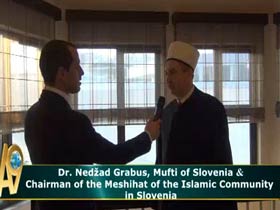
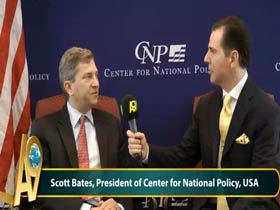
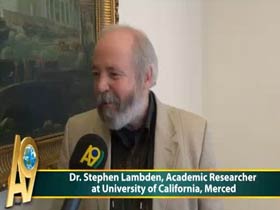
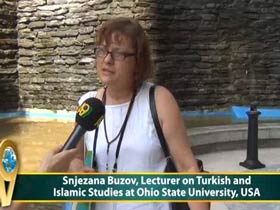
Sheikh Omar Salem, President of Ibn Rushd Insitute, Senior Fellow of the Foundation for Religious Diplomacy Sheikh Omar Salem, President of Ibn Rushd Insitute, Senior Fellow of the Foundation for Religious Diplomacy Prof. Dr. Seyyed Hossein Nasr, Iranian University Professor of Islamic Studies at George Washington University Prof. Dr. Seyyed Hossein Nasr, Iranian University Professor of Islamic Studies at George Washington University Bill Schneider, Distinguished Senior Fellow and Resident Scholar at Third Way Bill Schneider, Distinguished Senior Fellow and Resident Scholar at Third Way Dr. Nedzad Grabus, Mufti of Slovenia & Chairman of the Meshihat of the Islamic Community in Slovenia Dr. Nedzad Grabus, Mufti of Slovenia & Chairman of the Meshihat of the Islamic Community in Slovenia Scott Bates, President of Center for National Policy, USA Scott Bates, President of Center for National Policy, USA Dr. Stephen Lambden, Academic Researcher at University of California, Merced Dr. Stephen Lambden, Academic Researcher at University of California, Merced Snjezana Buzov, Lecturer on Turkish and Islamic Studies at Ohio State University, USA Snjezana Buzov, Lecturer on Turkish and Islamic Studies at Ohio State University, USA Obie Luschin Moore, CEO at DP Holding SA, Switzerland Obie Luschin Moore, CEO at DP Holding SA, Switzerland Hadi Salehi Esfahani, Professor of Economics at University of Illinois, Urbana Hadi Salehi Esfahani, Professor of Economics at University of Illinois, Urbana Barbara Brend, Specialist in the Field of Islamic Manuscript Painting, Persian, Ottoman, Sultanate and Mughal / London Barbara Brend, Specialist in the Field of Islamic Manuscript Painting, Persian, Ottoman, Sultanate and Mughal / London Dr. Sibylle Wentker, Centre for Studies in Asian Cultures and Social Anthropology, Institute of Iranian Studies - Austria Dr. Sibylle Wentker, Centre for Studies in Asian Cultures and Social Anthropology, Institute of Iranian Studies - Austria Dr. Raya Shani, Instructor on Islamic Art and Architecture at Hebrew University of Jerusalem Dr. Raya Shani, Instructor on Islamic Art and Architecture at Hebrew University of Jerusalem
00:00
Subtitles
Off
English (generated automatically)
00:00/00:00

Angel Rabasa, Senior Political Scientist in Rand Corp., USA

1431 December 19, 2012
Leaders And Thinkers Discuss Peace, Religion And Politics Turkish Islamic Union

Turkish-Islamic Union
A platform for peace and security in the Caucasus essential Articles
A platform for peace and security in the Caucasus essential
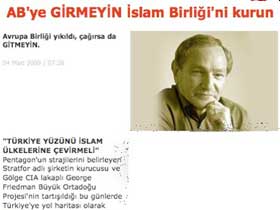
CEO of Stratfor: 'Establish the Islamic Union' Articles
CEO of Stratfor: 'Establish the Islamic Union'
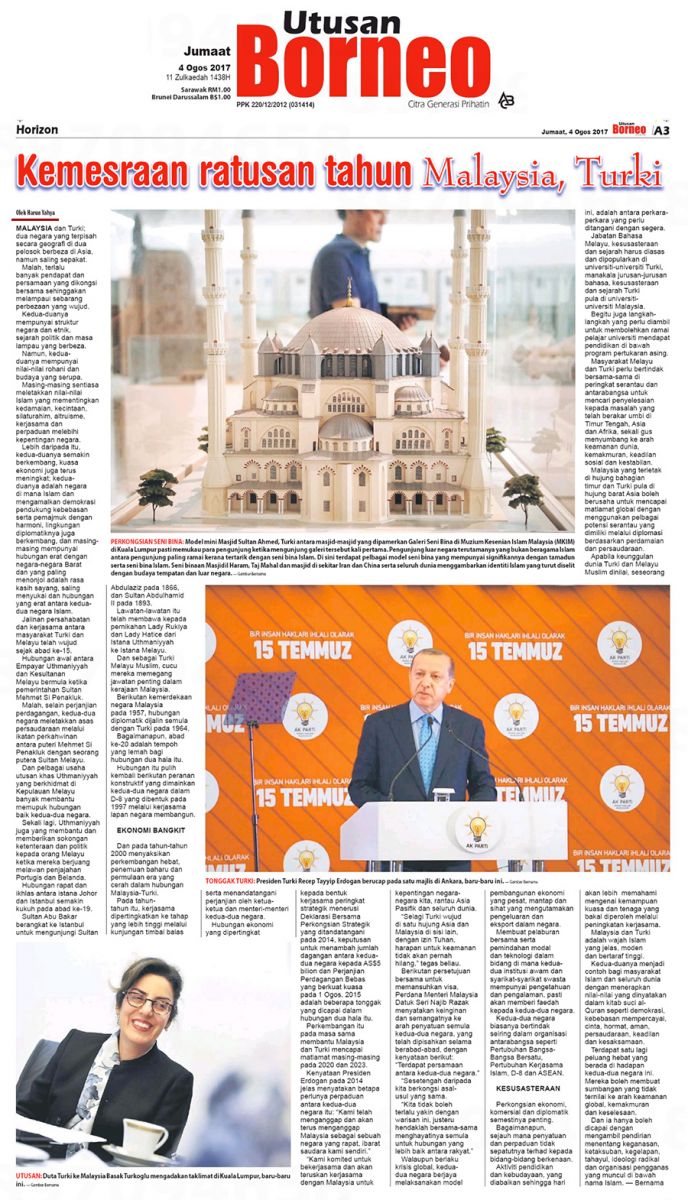
United, Malaysia And Turkey Stand Strong Articles
United, Malaysia And Turkey Stand Strong
Turkey fills the gap of Arabs Articles
Turkey fills the gap of Arabs
The way out of economic crisis is to establish the Turkish-Islamic Union Articles
The way out of economic crisis is to establish the Turkish-Islamic Union
Turkish troops are a guarantee for the Afghan people, of course they must be in Afghanistan Articles
Turkish troops are a guarantee for the Afghan people, of course they must be in Afghanistan
SHARE
Facebook
X
WhatsApp
Telegram
QR Code
Embed
QR Code

Embed

Downloads
mp3 mp4
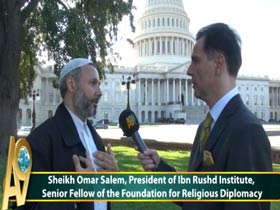
Sheikh Omar Salem, President of Ibn Rushd Insitute, Senior Fellow of the Foundation for Religious Diplomacy 12:19 Videos
Sheikh Omar Salem, President of Ibn Rushd Insitute, Senior Fellow of the Foundation for Religious Diplomacy
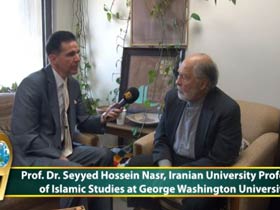
Prof. Dr. Seyyed Hossein Nasr, Iranian University Professor of Islamic Studies at George Washington University 27:36 Videos
Prof. Dr. Seyyed Hossein Nasr, Iranian University Professor of Islamic Studies at George Washington University
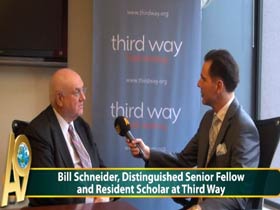
Bill Schneider, Distinguished Senior Fellow and Resident Scholar at Third Way 11:08 Videos
Bill Schneider, Distinguished Senior Fellow and Resident Scholar at Third Way
Dr. Nedzad Grabus, Mufti of Slovenia & Chairman of the Meshihat of the Islamic Community in Slovenia 01:29 Videos
Dr. Nedzad Grabus, Mufti of Slovenia & Chairman of the Meshihat of the Islamic Community in Slovenia
Scott Bates, President of Center for National Policy, USA 07:31 Videos
Scott Bates, President of Center for National Policy, USA
Dr. Stephen Lambden, Academic Researcher at University of California, Merced 01:28 Videos
Dr. Stephen Lambden, Academic Researcher at University of California, Merced
Snjezana Buzov, Lecturer on Turkish and Islamic Studies at Ohio State University, USA 01:28 Videos
Snjezana Buzov, Lecturer on Turkish and Islamic Studies at Ohio State University, USA
Obie Luschin Moore, CEO at DP Holding SA, Switzerland 03:59 Videos
Obie Luschin Moore, CEO at DP Holding SA, Switzerland
Hadi Salehi Esfahani, Professor of Economics at University of Illinois, Urbana 01:39 Videos
Hadi Salehi Esfahani, Professor of Economics at University of Illinois, Urbana
Barbara Brend, Specialist in the Field of Islamic Manuscript Painting, Persian, Ottoman, Sultanate and Mughal / London 00:37 Videos
Barbara Brend, Specialist in the Field of Islamic Manuscript Painting, Persian, Ottoman, Sultanate and Mughal / London
Dr. Sibylle Wentker, Centre for Studies in Asian Cultures and Social Anthropology, Institute of Iranian Studies - Austria 00:35 Videos
Dr. Sibylle Wentker, Centre for Studies in Asian Cultures and Social Anthropology, Institute of Iranian Studies - Austria
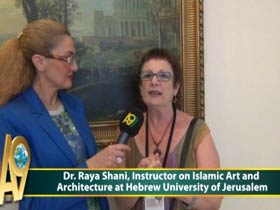
Dr. Raya Shani, Instructor on Islamic Art and Architecture at Hebrew University of Jerusalem 01:51 Videos
Dr. Raya Shani, Instructor on Islamic Art and Architecture at Hebrew University of Jerusalem
Oleh Kshanovsky, Borys Grinchenko Kyiv University - Ukraine 03:02 Videos
Oleh Kshanovsky, Borys Grinchenko Kyiv University - Ukraine
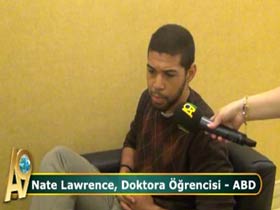
Nate Lawrence, PhD Student - USA 01:41 Videos
Nate Lawrence, PhD Student - USA
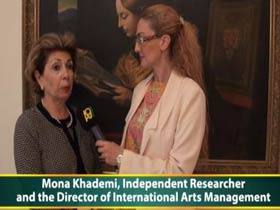
Mona Khademi, Independent Researcher and the Director of International Arts Management 01:38 Videos
Mona Khademi, Independent Researcher and the Director of International Arts Management
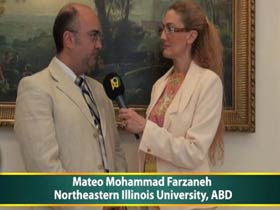
Mateo Mohammad Farzaneh, Northeastern Illinois University, USA 01:37 Videos
Mateo Mohammad Farzaneh, Northeastern Illinois University, USA
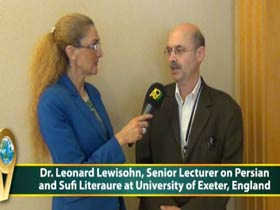
Dr. Leonard Lewisohn, Senior Lecturer on Persian and Sufi Literature at University of Exeter, England 02:42 Videos
Dr. Leonard Lewisohn, Senior Lecturer on Persian and Sufi Literature at University of Exeter, England
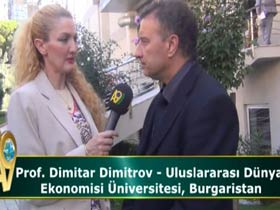
Prof. Dimitar Dimitrov - University of National and World Economy, Bulgaria 01:54 Videos
Prof. Dimitar Dimitrov - University of National and World Economy, Bulgaria
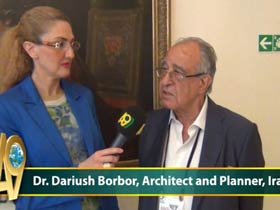
Dr. Dariush Borbor, Architect and Planner, Iran 02:52 Videos
Dr. Dariush Borbor, Architect and Planner, Iran
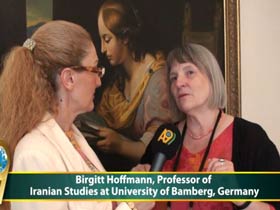
Birgitt Hoffmann, Professor of Iranian Studies at University of Bamberg - Germany 00:53 Videos
Birgitt Hoffmann, Professor of Iranian Studies at University of Bamberg - Germany
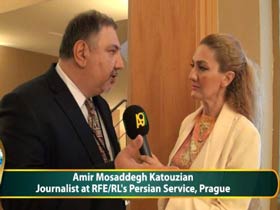
Amir Mosaddegh Katouzian, Journalist at RFE/RL's Persian Service, Prague 01:39 Videos
Amir Mosaddegh Katouzian, Journalist at RFE/RL's Persian Service, Prague
Haji Baba Edmond Brahimaj World Leader of Bektashis 01:39 Videos
Haji Baba Edmond Brahimaj World Leader of Bektashis
Prof. Dr. Gerard Toal, Virginia Tech University / USA 01:55 Videos
Prof. Dr. Gerard Toal, Virginia Tech University / USA
Sahra Mubarak Haibe, Sweden 00:56 Videos
Sahra Mubarak Haibe, Sweden
Dr. Asmat Mojaddedi, Chairman of the Muslim Council in Denmark 02:11 Videos
Dr. Asmat Mojaddedi, Chairman of the Muslim Council in Denmark

This video features political scientist Angel Rabasa, who discusses the roots of global terrorism and the ideological conflicts within the Muslim world. He argues that radicalism is a modern, totalitarian phenomenon that misuses religious terminology, ultimately harming mainstream Muslim communities most severely. The video emphasizes that addressing this extremism requires the efforts of mainstream Muslims to reclaim their traditions and foster democratic, responsive governance.

  • Mainstream Muslims are the primary victims of radical terrorist ideologies that seek to impose control.
  • Radical ideologies often represent a modern, totalitarian distortion rather than traditional Islamic practice.
  • The failure of secular political models in the 20th century created an ideological vacuum exploited by radical groups.
  • Responsive, democratic governance is essential to stripping away the justifications used by violent radicals.
  • Muslims themselves must lead the effort to counter radicalism and protect their own culture and heritage.
Why is it important to recognize that most victims of radical terrorism are Muslims? +

Recognizing this fact counters the misconception that terrorism is exclusively directed at the West. It highlights that the phenomenon is primarily an internal ideological conflict where radical groups violently target their own communities to enforce their agenda.

How does the speaker characterize the ideology of modern radical groups? +

Although these groups claim to return to early Islamic practices, their ideologies are identified as modern, totalitarian constructs. These viewpoints are heavily influenced by 20th-century political movements rather than authentic historical Islamic traditions.

What role did the failure of past political models play in the rise of extremism? +

The failure of mid-20th-century socialist and Marxist models to provide economic development and stability left a void. Radical groups capitalized on this disappointment by positioning their specific interpretation of religion as a viable alternative solution.

How can democratic progress impact the prevalence of radicalism? +

By establishing governments that are responsive to the interests of the people, societies can remove the political grievances that radicals exploit. Stable democratic systems undermine the narrative that violence is the only effective means for political change.

Summary

This video features political scientist Angel Rabasa, who discusses the roots of global terrorism and the ideological conflicts within the Muslim world. He argues that radicalism is a modern, totalitarian phenomenon that misuses religious terminology, ultimately harming mainstream Muslim communities most severely. The video emphasizes that addressing this extremism requires the efforts of mainstream Muslims to reclaim their traditions and foster democratic, responsive governance.

Key Takeaways

  • Mainstream Muslims are the primary victims of radical terrorist ideologies that seek to impose control.
  • Radical ideologies often represent a modern, totalitarian distortion rather than traditional Islamic practice.
  • The failure of secular political models in the 20th century created an ideological vacuum exploited by radical groups.
  • Responsive, democratic governance is essential to stripping away the justifications used by violent radicals.
  • Muslims themselves must lead the effort to counter radicalism and protect their own culture and heritage.

Frequently Asked Questions

Why is it important to recognize that most victims of radical terrorism are Muslims?

Recognizing this fact counters the misconception that terrorism is exclusively directed at the West. It highlights that the phenomenon is primarily an internal ideological conflict where radical groups violently target their own communities to enforce their agenda.

How does the speaker characterize the ideology of modern radical groups?

Although these groups claim to return to early Islamic practices, their ideologies are identified as modern, totalitarian constructs. These viewpoints are heavily influenced by 20th-century political movements rather than authentic historical Islamic traditions.

What role did the failure of past political models play in the rise of extremism?

The failure of mid-20th-century socialist and Marxist models to provide economic development and stability left a void. Radical groups capitalized on this disappointment by positioning their specific interpretation of religion as a viable alternative solution.

How can democratic progress impact the prevalence of radicalism?

By establishing governments that are responsive to the interests of the people, societies can remove the political grievances that radicals exploit. Stable democratic systems undermine the narrative that violence is the only effective means for political change.

Telif Hakkı © 2026 Gizlilik Politikası Kullanım Koşulları Contact